Dyson, das Juwel der britischen Ingenieurskunst, ist weltweit für innovative Staubsauger und Haartrockner bekannt. Nun wagt sich das Unternehmen in die Automobilwelt vor – mit einer Reihe hochmoderner Elektroautos.
Laut einem Bericht der Financial Times plant Dyson drei Elektrofahrzeuge mit Festkörperbatterien, die bis Ende des nächsten Jahrzehnts auf den Markt kommen sollen. Das Projekt im Wert von geschätzten 2,8 Milliarden Dollar zielt darauf ab, Konkurrenten wie Teslas Elon Musk herauszufordern. Dyson sucht derzeit 300 zusätzliche Ingenieure, um das bestehende Team von 400 Personen zu verstärken.
Diese Informationen stammen aus Berichten, die Dyson nicht direkt kommentiert hat. Fünf Monate zuvor bestätigte Gründer James Dyson in einer internen Notiz die Pläne. Er kritisierte große Autohersteller scharf: „Sie umgehen Luftreinhaltungsvorschriften und täuschen die Öffentlichkeit.“ Dyson betonte, dass steigende Smogwerte ein Problem seien, das andere ignorieren.
Die Notiz ging an alle globalen Mitarbeiter und wurde teilweise über Dysons offiziellen Twitter-Account geteilt. Dyson investiert 2 Milliarden Pfund in das Batteriefahrzeugprojekt und nutzt Expertise aus Supersonic-Haartrocknern und kabellosen Staubsaugern – insbesondere digitale Motoren, die bis zu 104.000 Umdrehungen pro Minute erreichen.
Aufgrund des hohen Wettbewerbs hält Dyson Details zurück, schließt aber Kooperationen mit Autoherstellern aus. Die Produktionsstätte ist unbekannt, ein geheimes Team arbeitet seit zwei Jahren in Malmesbury, Wiltshire.
Der globale Luftverschmutzungsdruck wächst: Tesla, BMW, Ford, Mazda und Jaguar Land Rover setzen auf Elektromobilität. Großbritannien plant ein Verbot von Benzin- und Dieselautos bis 2040, Schottland bis 2032. Eine Studie in Environmental Research Letters verknüpft Diesel-Emissionen mit 5.000 vorzeitigen Todesfällen jährlich in Europa – Großbritannien liegt auf Platz 4.
EU-Normen wie Euro 1 bis 6 haben Fortschritte gebracht, doch über 100 Millionen Dieselautos rollen durch Europa. Dyson erhielt 2016 staatliche Förderung von 174 Millionen Pfund und holte Experten wie Ex-Tesla-Designer und Dr. Ian Robertson (ehemals BMW).
Mehr lesen: Das große Problem beim Übergang zu Elektroautos
Hinweis von James Dyson an die Mitarbeiter
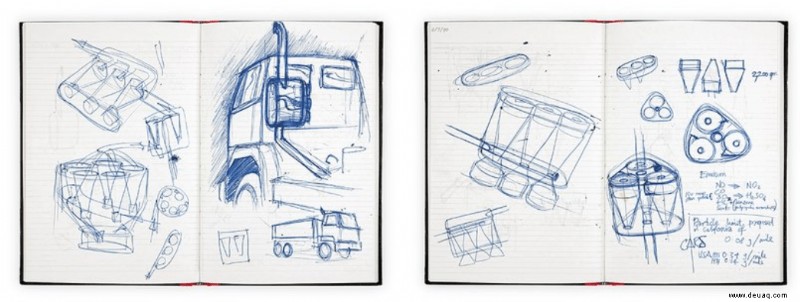
„1988 las ich eine Abhandlung des US-amerikanischen National Institute of Occupational Safety and Health, in der die Abgase von Dieselmotoren mit dem vorzeitigen Tod von Labormäusen und -ratten in Verbindung gebracht wurden. Im März 1990 begann ein Team bei Dyson mit der Arbeit an einem Zyklonfilter, der an der Abgasanlage eines Fahrzeugs angebracht werden konnte, um Partikel einzufangen.“
„In 1993 we had developed several working prototypes and showed an early iteration to British television Blue Peter. The team went on to develop a much more sophisticated technology.“
„To our chagrin, nobody at the time was interested in employing our diesel exhaust capture system and we stopped the project. The industry said that ‘disposing’ of the collected soot was too much of a problem! Better to breathe it in?“
„In the period since, governments around the world have encouraged the adoption of oxymoronically designated ‘clean diesel’ engines through subsidies and grants. Major auto manufacturers have circumvented and duped clean air regulations. As a result, developed and developing cities are full of smog-belching cars, lorries and buses. It is a problem that others are ignoring.“
„Throughout, it has remained my ambition to find a solution to the global problem of air pollution. Some years ago, observing automotive firms were not changing their sports, I committed the company to develop new battery technology. I believed that electrically powered vehicles would solve the vehicle pollution problem. Dyson carried on innovating.“
„The latest digital motor and energy storage systems power the Dyson Supersonic hair dryer and cord-free vacuum line. We’ve relentlessly innovated in fluid dynamics and HVAC systems to build our fans, heaters and purifiers.“
„At this moment, we finally have the opportunity to bring all out technologies together into a single product. Rather than filtering emissions at the exhaust pipe, today we have the ability to solve it as the source. So I wanted you to hear it directly from me: Dyson has begun work on a battery electric vehicle, due to be launched by 2020.“
„We’ve started building an exceptional team that combines top Dyson engineers with talented individuals from the automotive industry. The team is already over 400 strong, and we are recruiting aggressively. I’m committed to investing £2bn on this endeavour.“
„The project will grow quickly from her but at this stage we will not release any information.“